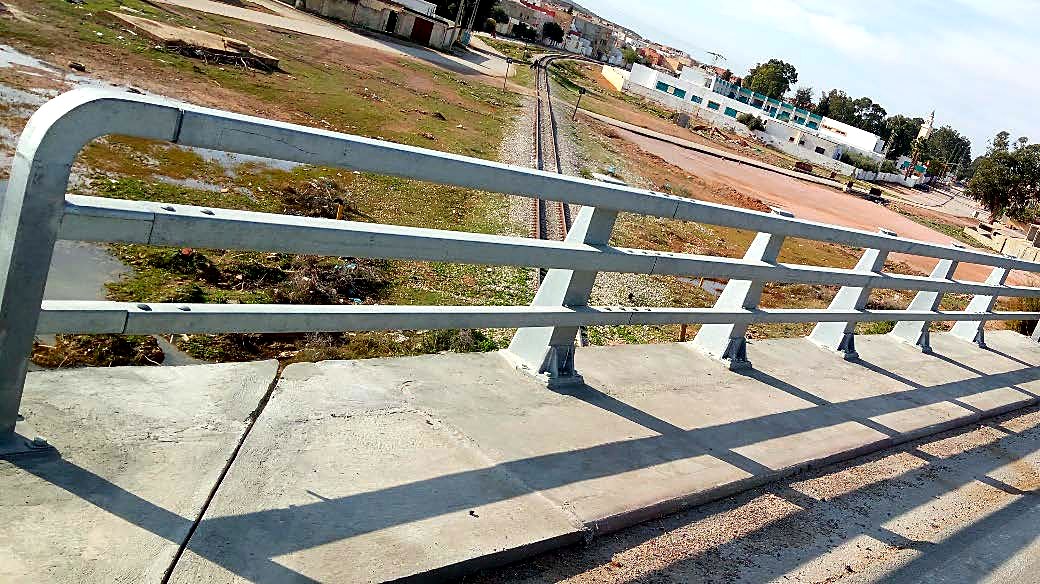
Reinforced-concrete jacketing
A new shell of reinforced concrete. Robust, for massive members and extensive damage.

EXPERTISE / JACKETING
BBTP strengthens piers, walls, beams and pier caps with reinforced-concrete jacketing: a new shell of reinforced concrete, anchored into the old concrete, that restores strength and durability to the structure.
HOW IT WORKS
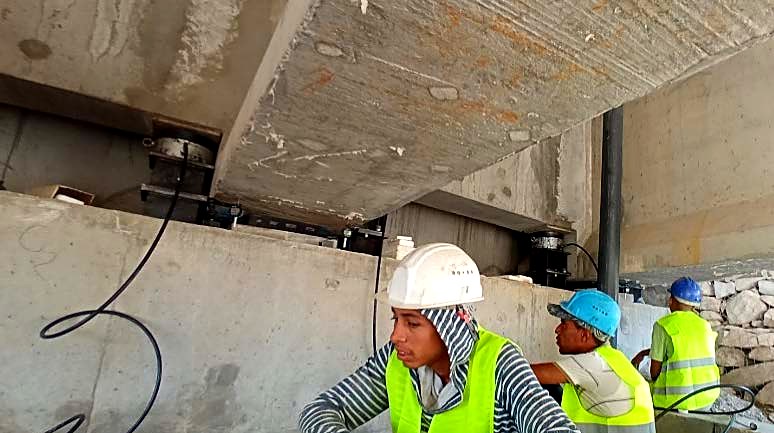
Jacketing means wrapping an existing member, a pier, wall, beam or pier cap, in a new layer of reinforced concrete. Bars are anchored into the old concrete, then new concrete is cast in formwork all around it: old and new concrete work together.
It restores the strength of a weakened member, protects its reinforcement for the long term and lets it carry higher loads. It is a robust solution, suited to massive members and extensive damage.
WHEN TO JACKET
The choice is made after assessing the structure, with the engineering office, which sets the thickness and reinforcement of the jacket.
THE SOLUTIONS
The engineering office chooses the technique according to the structure and the loads involved: BBTP carries out all three.
A new shell of reinforced concrete. Robust, for massive members and extensive damage.
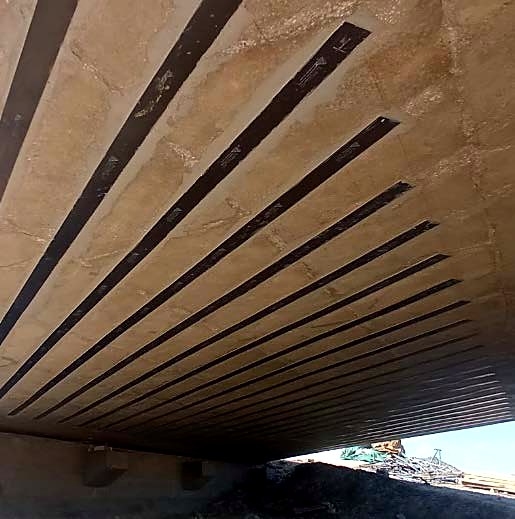
Bonded plates or fabric. Very light, to strengthen without thickening the members.
External post-tensioning cables, anchored and deviated on concrete blocks, to strengthen decks.
OUR METHOD
Survey of the structure; jacket thickness and reinforcement set by the engineering office.
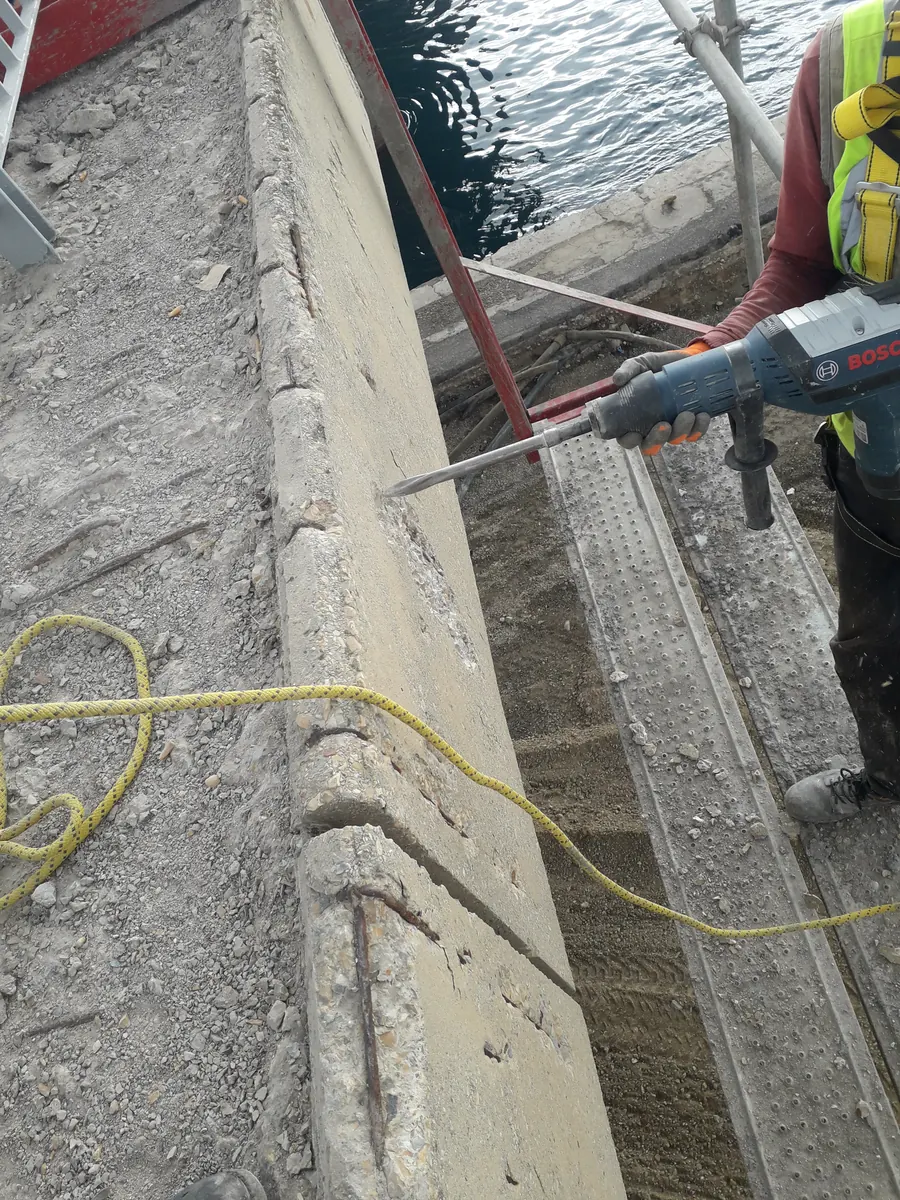
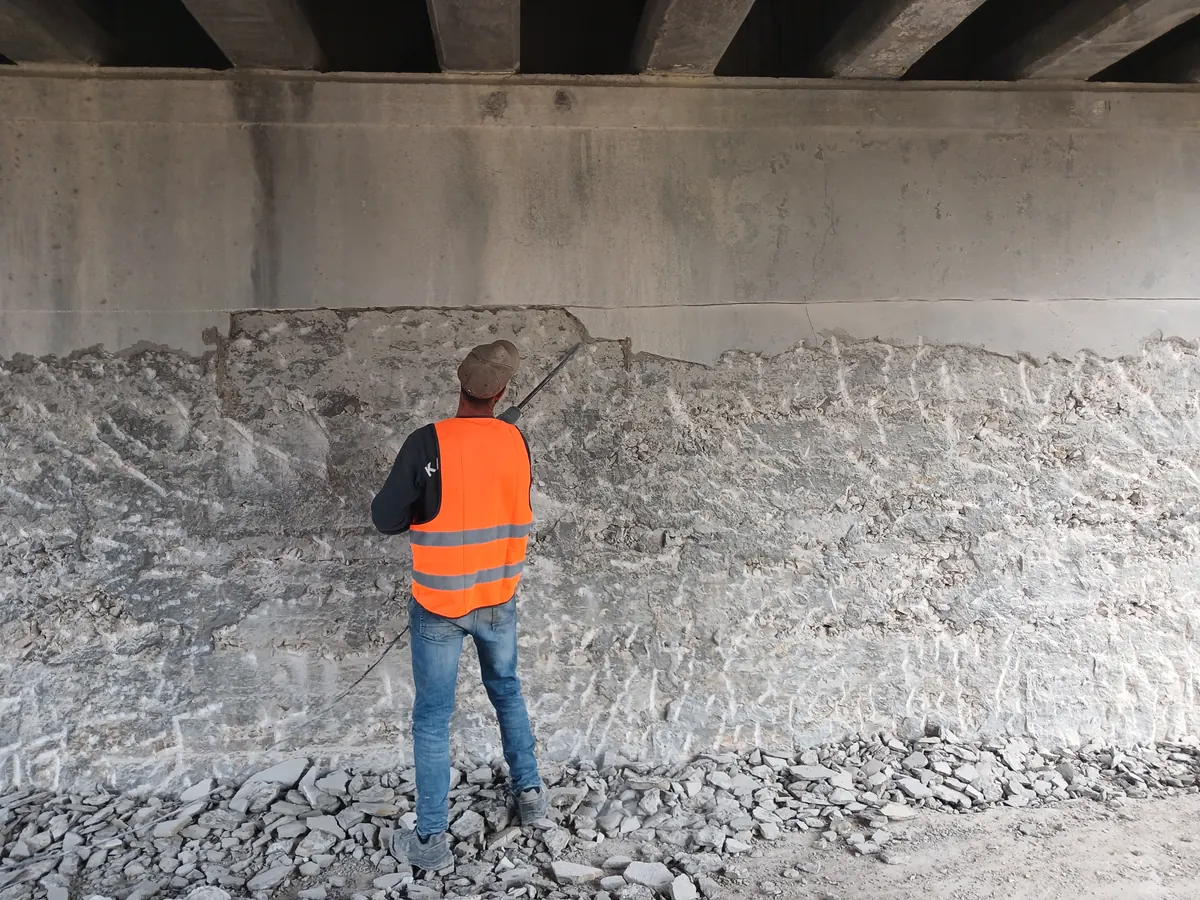
Scabbling the surface back to sound concrete, for a good bond with the new concrete.
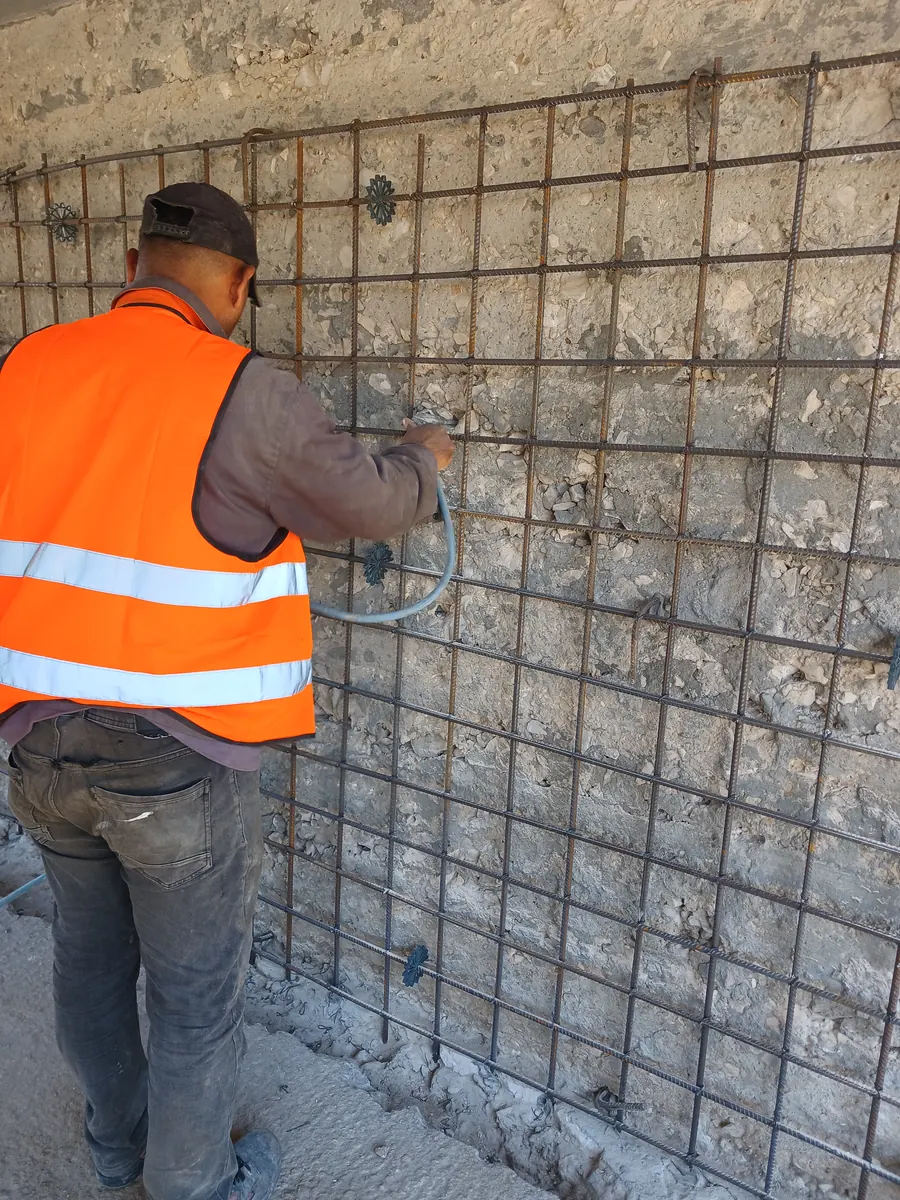
Bonding anchors into the old concrete, fixing the reinforcement and cover spacers.
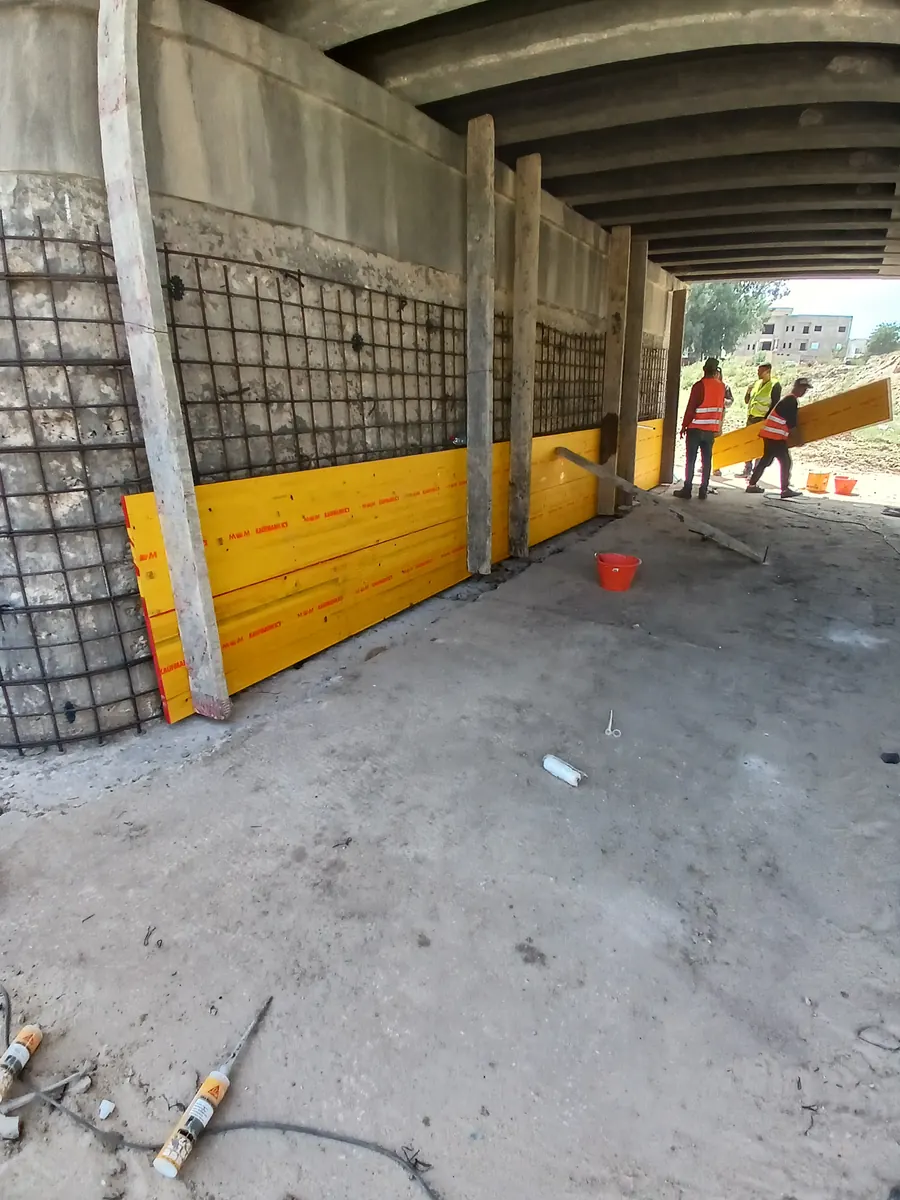
Cleaning the substrate, formwork around the member and casting the new concrete.
Striking the formwork, curing the concrete, treating the joints and final checks.
KEY POINTS
New concrete only strengthens the structure if it bonds with the old. Every stage is checked before casting.
ON SITE
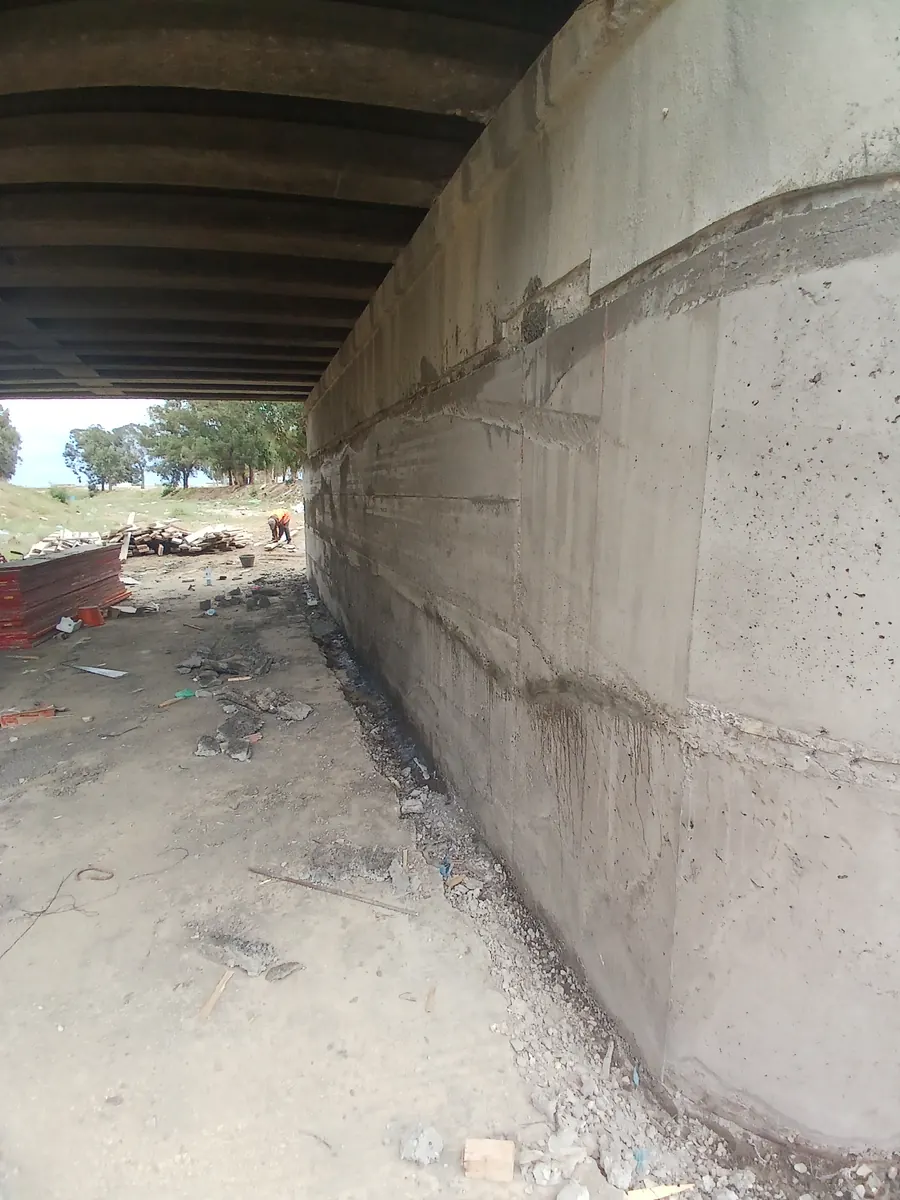
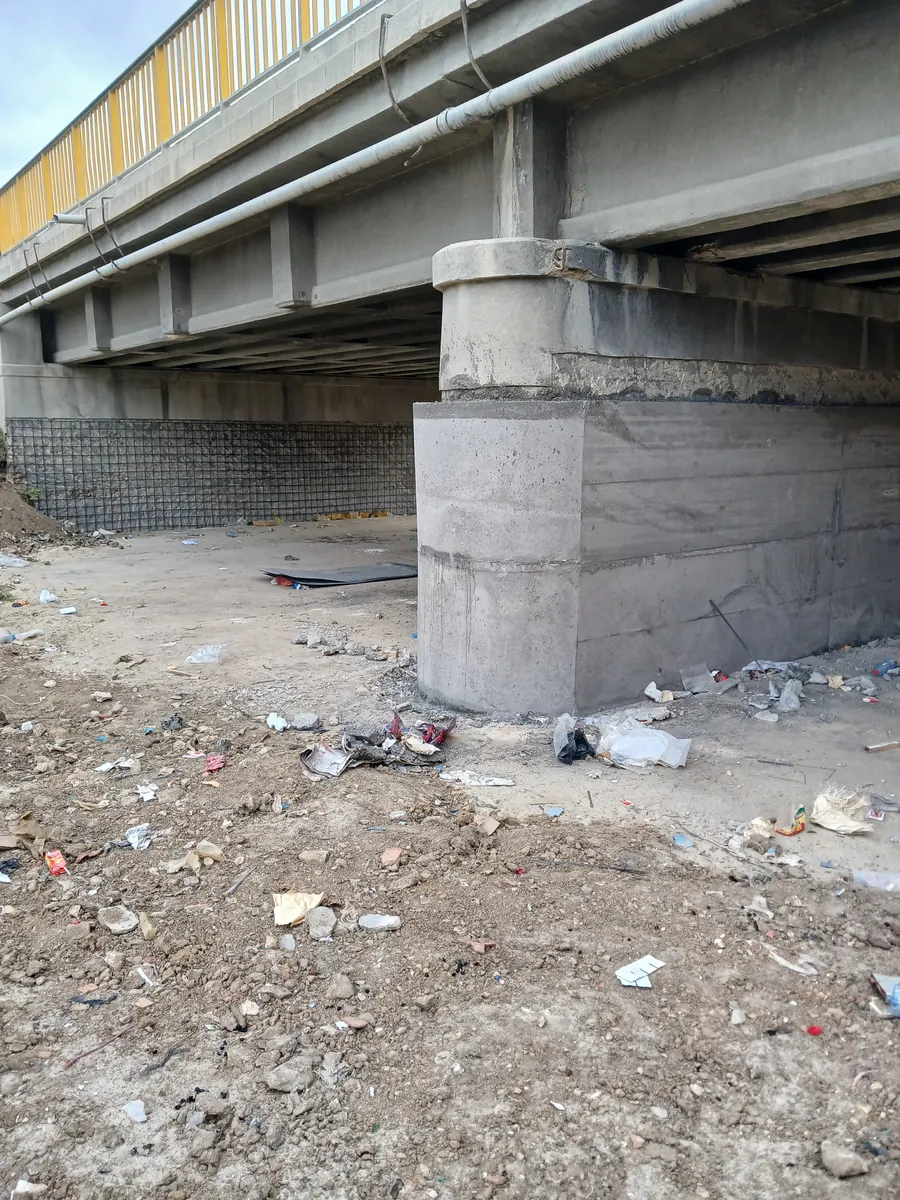
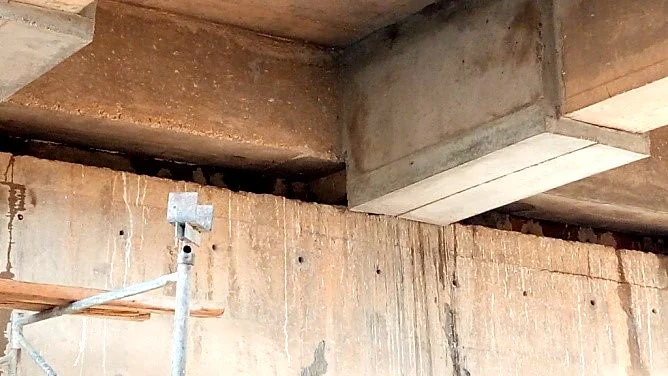
WHY BBTP
BBTP specialises in repairing bridges and strengthening structures, including reinforced-concrete jacketing of vertical or horizontal members.
Work in all 24 Tunisian governorates, notably for the Ministry of Equipment.
Crews trained by Mohamed Salah Biri, former head of SOMATRA’s structures department.
FAQ
Yes. Beyond bridges and structures, BBTP repairs and strengthens buildings: residential and public buildings, factories, cement plants and industrial sites, with the same techniques.
Repair rebuilds damaged concrete locally with mortar. Jacketing adds a complete reinforced-concrete shell around the member: it repairs and strengthens it at the same time.
To some extent, yes: it increases the self-weight and dimensions of the member, which the design calculation takes into account. Where weight or space is critical, carbon fibre strengthening is an alternative.
To remove damaged concrete and create a rough, clean surface: the new concrete bonds better and both concretes work together.
Not necessarily: piers and walls are usually jacketed under the deck, without touching the carriageway. Traffic arrangements are agreed with the project owner.
Throughout Tunisia. BBTP works in all 24 governorates, notably for the Ministry of Equipment.
A STRUCTURE TO STRENGTHEN?
Project owners, design offices, contractors: tell us about the structure and the defects observed, and we will get back to you.
Contact us